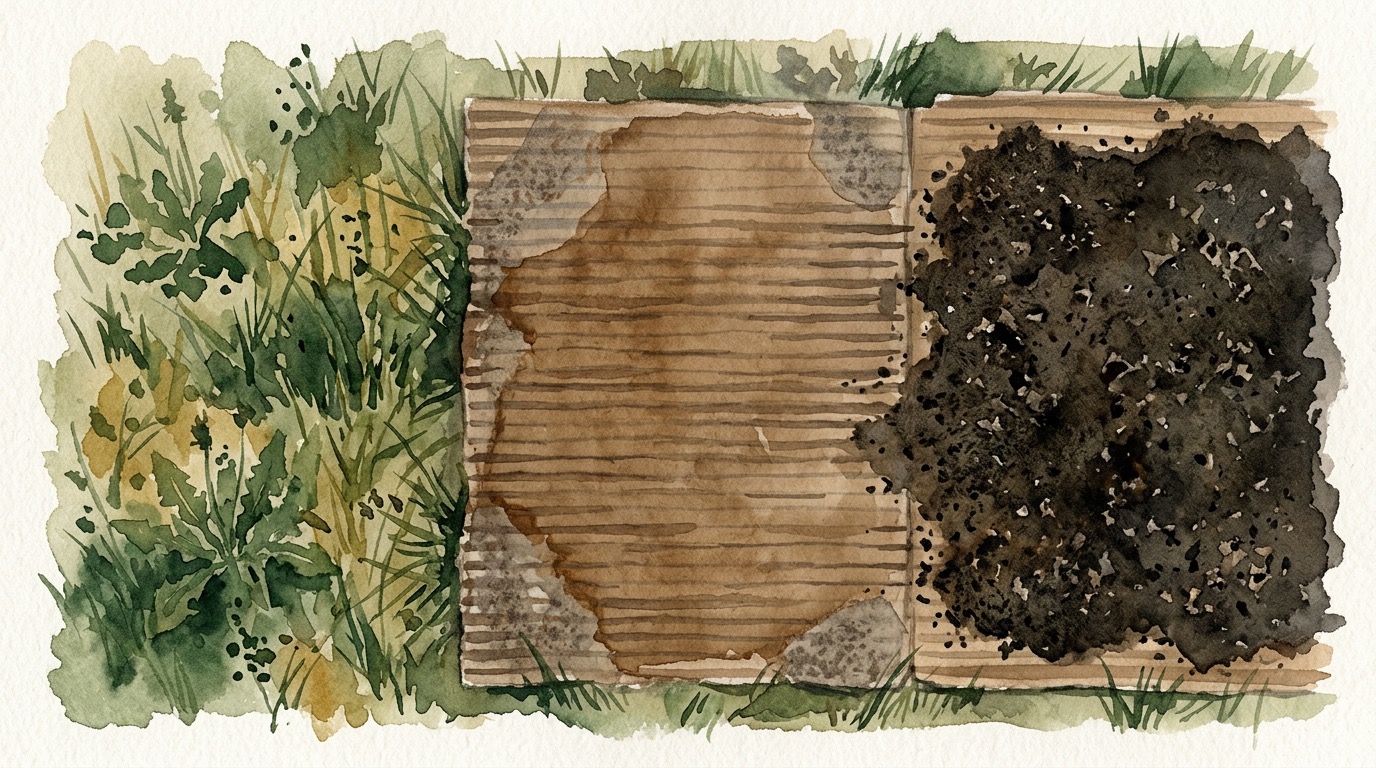
Grass and weeds need light. Take it away for long enough and they run out of the reserves they were living on, die back, and are eaten by the soil life underneath. What you are left with is the same ground, improved rather than emptied — and you never lifted a spade. It is the slow route, and slow is rather the point: most of the work happens while you are somewhere else.
What to cover with
- Plain cardboard. Boxes are ideal, and usually free. Take off the tape, the labels, the staples and any plastic film; the printed ink can stay, it is soy-based on almost everything now. Cardboard is heavy once it is wet, it moulds itself to uneven ground, and it is gone within three to six months — eaten by the same worms you are trying to encourage.
- A wool mat, if you would rather buy something. Felted sheep's wool, sold by the metre at around 250 g per square metre and about 4 mm thick. It costs real money, it stays where you put it on a windy site, and it breaks down over one or two seasons, feeding the soil as it goes.
- Whatever the garden already makes, spread on top of either: grass clippings, autumn leaves, straw, spent crops. A layer 5–10 cm deep keeps light out, holds moisture in and feeds the surface. Let clippings wilt for a day first, or they mat together and go sour.
What not to cover with
Not plastic. Sheeting, tarpaulin and woven weed fabric all work in the narrow sense that they exclude light, and they all fail the same way: they get left. One season becomes three, the fabric goes brittle in the sun, and then it tears into pieces small enough that you will never get them all out again. What you set out to do was improve a piece of ground; what you are left with is a bed with plastic in it, permanently.
There are jobs where a heavy light-proof tarp is the honest tool — an area of established couch or bindweed is the obvious one, and it wants a full season of it. If you use one, treat it as equipment you have promised to lift, with a date attached, rather than as a layer you are building.
Cardboard costs nothing and composts; wool costs more and composts. Between them they cover almost everything a garden asks for.
Laying it down
Cut the growth short first if it is long — a strimmer, a mower on its lowest setting, or shears. Leave the clippings where they fall; they are the first thing the worms will come up for.
Lay the cardboard straight onto the grass with generous overlaps, at least 15 cm at every seam. The overlaps are the whole job: a gap the width of your finger is a light shaft, and couch grass will find it. Soak it thoroughly as you go, so it stays flat and starts breaking down.
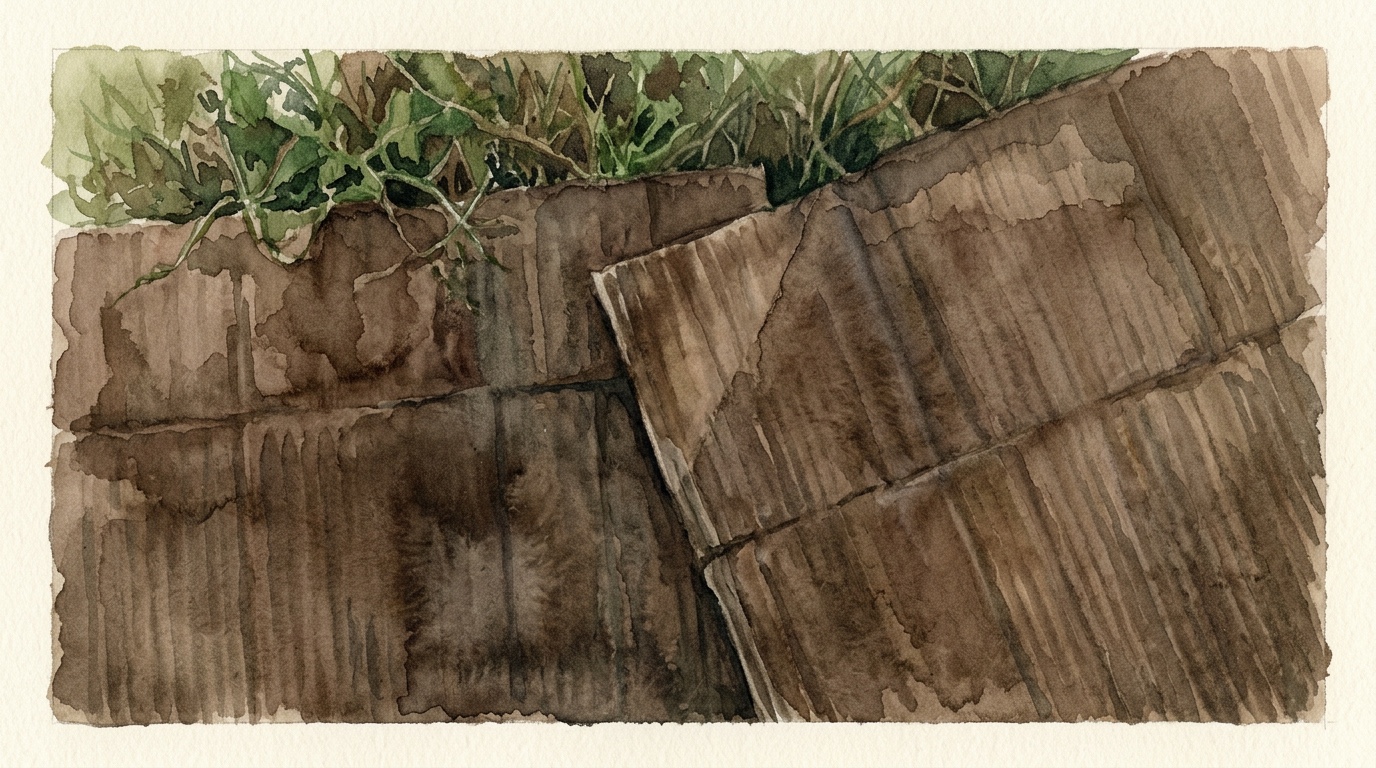
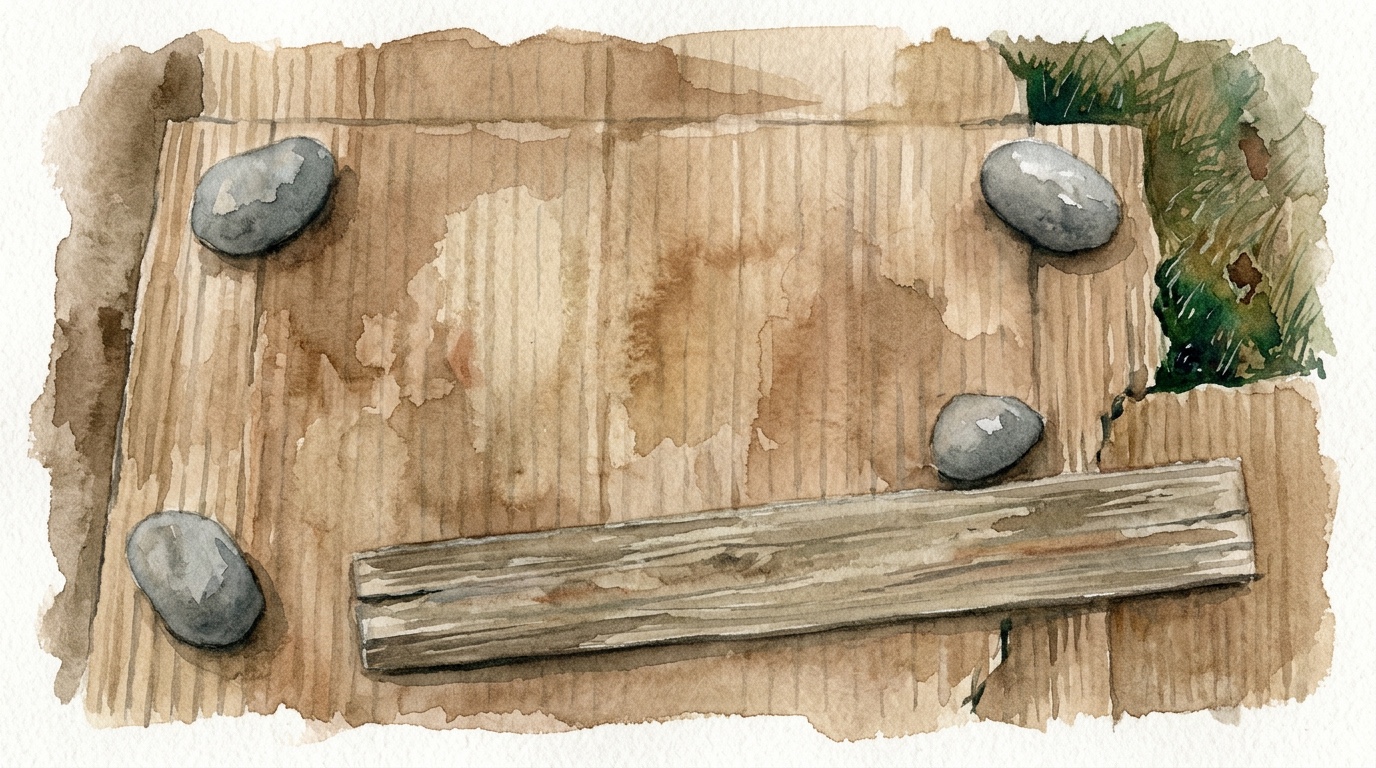
Then weigh it down. Dry cardboard is a sail, and one windy afternoon puts it in the hedge. Compost is the usual answer; where you are not adding any straight away, use stones, planks, bricks, or bags of sand — kinder on the back, and easier to move when you come back.
Then one of four things
Covering is one job with four different endings, and which one you want depends on what that ground is for this year.
1. Plant into it now. Spread 10–15 cm of compost or bagged soil straight over the cardboard and plant into that. Anything shallow-rooted is happy there while the cardboard is still intact underneath — salads, beans, courgettes, squash, brassicas, leeks. Carrots and parsnips want more depth than that layer gives them, so let those beds have a season first.
2. Sow a cover crop. A cover crop is a plant you grow and never harvest: it covers the ground, its roots open the soil, and the whole of it goes back in. Phacelia, buckwheat and mustard are quick in summer; rye, vetch and clover will hold ground through the winter. Sow into a shallower layer of compost — 5 cm is enough — and cut the crop down before it sets seed, leaving the tops lying on the surface.
3. Leave it covered. Cardboard, weighted down, and nothing else, for the ground you know you will not get to this year. It is the cheapest and the slowest, and it is a real answer rather than a failure to choose one: covered ground improves while it waits, where bare ground loses its structure and grows weeds. The compost goes on when you come to plant it.
4. Stand the compost heap on it. Build your heap on the covered ground and open a bed alongside it. The heap does the covering for you, more thoroughly than cardboard on its own, and when you eventually move it you have the cleanest and richest patch in the garden. This is the option that pairs with getting one bed going properly this year instead of four badly.
Compost is not optional
All four endings have compost in them. They differ in when it goes on and how deep, never in whether — and that is worth being blunt about, because "covering saves you the compost" is a tempting thing to believe and it is not true. Compost feeds the soil life doing the work under the cardboard; it holds water in a dry week and drains in a wet one. A garden without a compost supply is a garden slowly running down.
So if you have none: start a heap this week, and buy some for this season. Municipal green waste is cheap and usually good. Bagged multipurpose is convenient and mostly peat, which is worth knowing before you buy a pallet of it — see Peat Soil and Alternatives.
How long it takes
Cardboard is usually gone in three to six months, and the grass under it dies well before that.
Perennial weeds are the slower half. Sweden's agricultural university gives a full growing season under a light-proof cover as the working figure for couch, creeping thistle and bindweed, and two seasons for close to complete control. Annual weeds are much easier: eight or nine sheets of newspaper, wetted and weighed down, will see off a season of them.
A few perennials come through anyway, usually at the seams. Pull those as you see them — without leaves they have nothing left to spend.
Why it is worth it
Digging inverts the soil, and everything living in it has to reorganise. Left alone, a soil builds its own structure: fungal threads, worm channels, a crumb you can push a finger into. Covering feeds the top and lets the rest carry on.
It is also less work in the moment, and asks for patience instead. If you want to sow carrots this season rather than next, clearing the ground is the honest answer.